Procedural meshes,
without the overhead.
The high-performance, fully dynamic mesh component for Unreal Engine. Build and update geometry at runtime with a render path engineered for scale — LODs, collision, and threading included.
Already bought it? Verify your purchase for private repo access.
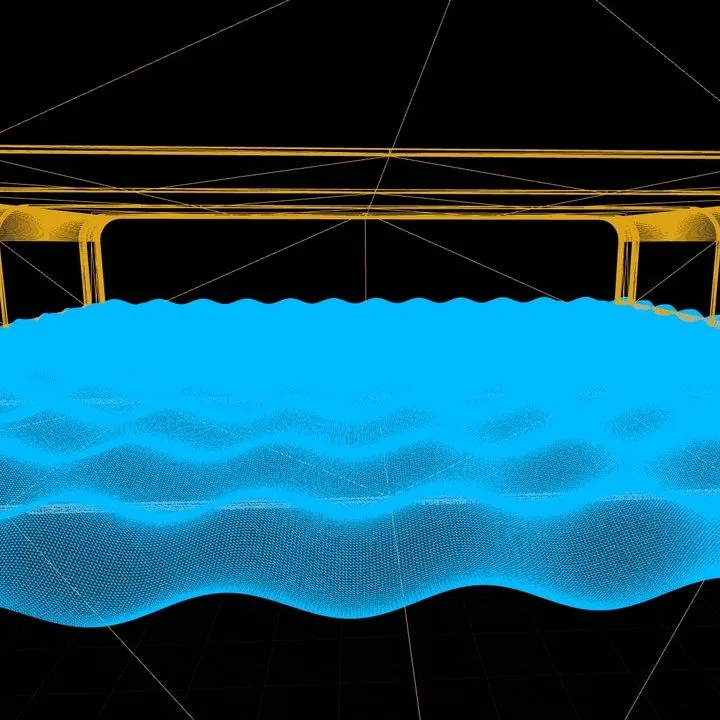
Engineered for realtime geometry.
Nanite at runtime
Build Nanite-ready meshes from procedural data at runtime — real cluster groups, full LOD DAG, per-page streaming. No cooked bake, no UStaticMesh round-trip.
Lumen, SDF & HWRT
Efficient runtime Lumen card generation and accurate signed distance fields — dynamic meshes light correctly under Lumen GI and hardware ray tracing.
Fully dynamic geometry
Build and update meshes every frame through a minimal-overhead render path engineered for high vertex counts and async updates.
Mesh replication
Opt-in runtime mesh replication over UnrealNet — per-LOD coarse-first streams, catch-up for late joiners, material and SDF/card replication. One flag per mesh.
PMC & DynamicMesh interop
Easy migration from ProceduralMeshComponent and a built-in renderer for UDynamicMesh — keep your geometry pipelines, gain RMC’s render path.
Collision & NavMesh
Full collision for static and dynamic meshes, cooked async to keep the game thread moving. Full NavMesh integration out of the box.
Up to 8 LODs
Engine-maximum LOD support with full dithering across transitions. Stream the right level for the camera with zero hand-rolled glue.
Flexible mesh formats
Trade memory for features as your project needs — up to 8 UV channels, normal or high-precision UVs and normals, and variable index widths.
Open-source core
MIT-licensed foundation, used in production across thousands of projects. Free forever; Pro adds the heavier machinery when you ship.
A few lines to a live mesh.
Create a component, stream in vertices and triangles, and update any section on demand — from C++ or Blueprint.
Full API reference ↗URealtimeMeshSimple* Mesh = RMC->InitializeRealtimeMesh<URealtimeMeshSimple>(); FRealtimeMeshStreamSet Streams; TRealtimeMeshBuilderLocal Builder(Streams); Builder.AddTriangle(v0, v1, v2); Mesh->CreateSectionGroup(GroupKey, MoveTemp(Streams));
Free forever — even commercial. Pro for the extras.
Need RealtimeMeshComponent to do something it doesn’t?
I build custom features, extensions, and integrations on top of my own plugins — by the person who wrote them. Two ways to run it, depending on whether you want to own the result.
Built for you, owned by you
A feature or integration built specifically for your project. The source is yours outright and stays private to your team — it doesn't ship to anyone else.
Built into the plugin, reduced rate
The same work, but it lands in RealtimeMeshComponent itself and ships to everyone in a later release. You get it first and direct where it goes — at a lower cost, because it isn't exclusive.
Common questions.
Which engine versions are supported?
Unreal Engine 5.0 through 5.8. The current release supports UE 5.5–5.8; earlier releases cover engines back to UE 5.0 and remain available on GitHub. New engine releases are supported shortly after each launch — see the changelog for per-release engine compatibility.
Do I need C++ to use it?
No. RMC exposes its full mesh-building API to both C++ and Blueprint. The current docs lean on C++ examples, but you can build and update geometry from Blueprint with no C++ at all.
Is RMC free?
The Core component is open-source under the MIT licence on GitHub. Pro is a paid version on the Marketplace, adding RealtimeMeshDynamic (DynamicMesh / Geometry Scripting interop), RealtimeMeshComposable (hierarchical factory meshes), and first-party support.
Can I generate meshes on a background thread?
Yes. Collision updates run asynchronously off the game thread by default, and mesh updates are partial — only the sections you actually change are touched. See Component Core / Structure for the static vs. dynamic section draw modes.
How is collision handled?
Full collision for both static triangle mesh and dynamic moving objects, with full NavMesh integration. Cooking can run synchronously or asynchronously per update, keeping heavy regeneration off the game thread.
Recent releases.
Start building procedural geometry today.
Free and open source — commercial use included. Upgrade to Pro for the extras.